15 Solo Travel Safety Gadgets Every Woman Should Pack With Confidence
Traveling solo can feel freeing, calm, and exciting, but it is normal to want a little extra peace of mind on the road. That is exactly why solo travel safety gadgets are worth packing. They will not replace common sense or careful planning, but the right small tools can help you sleep better in a new hotel, keep your bag safer in a busy crowd, and reach help or find your way back if plans change.
In this guide you will find the most useful personal safety devices for travel, grouped by how you actually use them: gadgets you carry every day, gadgets that make a hotel room or rental feel safer, and smart tech that keeps you connected and easy to find. Each idea includes honest notes on what it can and cannot do, what to check before you buy, and simple mistakes to avoid. You will also find a clear step-by-step routine for setting everything up, so you are not figuring it out for the first time in a tired moment after a long flight.
You do not need to pack all fifteen ideas. Most solo travelers feel well covered with four or five basics that fit their trip: a personal alarm, a portable door lock, an anti-theft bag, a tracker, and a good portable charger. Start with those, add what fits your destination and your comfort level, and leave the rest. Feeling prepared is the goal, not filling your suitcase. And as you plan what to wear for travel days, our guide to comfortable plus-size airport outfits that still look cute can help you pick pockets and layers that work well with the carry gadgets below.
Everyday Safety Gadgets You Can Carry Anywhere
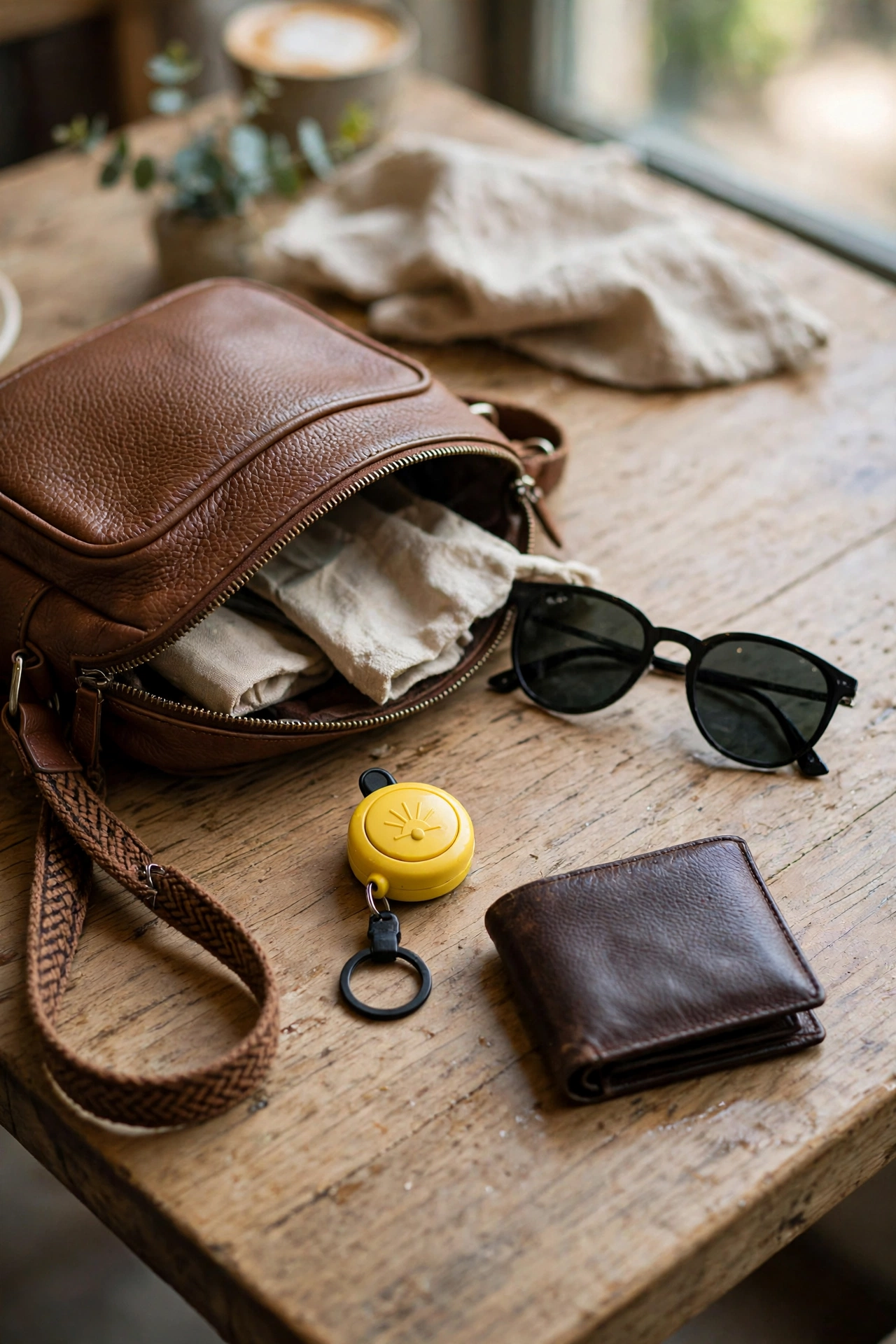
The best everyday travel safety essentials for women are small, light, and easy to use without thinking twice. If a gadget is bulky, confusing, or embarrassing to carry, you will leave it in your hotel room, and then it cannot help you at all. The items in this section live in your day bag or on your keychain. They go with you to breakfast, on a walking tour, on public transit, and on a quiet evening stroll back to your hotel. They are also a good place to start if you are new to solo travel and want to build confidence step by step.
Before you buy anything, check the rules for where you are going. Rules for flights, trains, and certain venues can differ by country and by carrier, and some self-defense items that are common in one place are not allowed in another. This guide sticks to widely accepted, non-weapon safety tools like alarms, locks, bags, and trackers, which are a safer choice for most trips.
A Loud Personal Alarm You Can Reach in Seconds
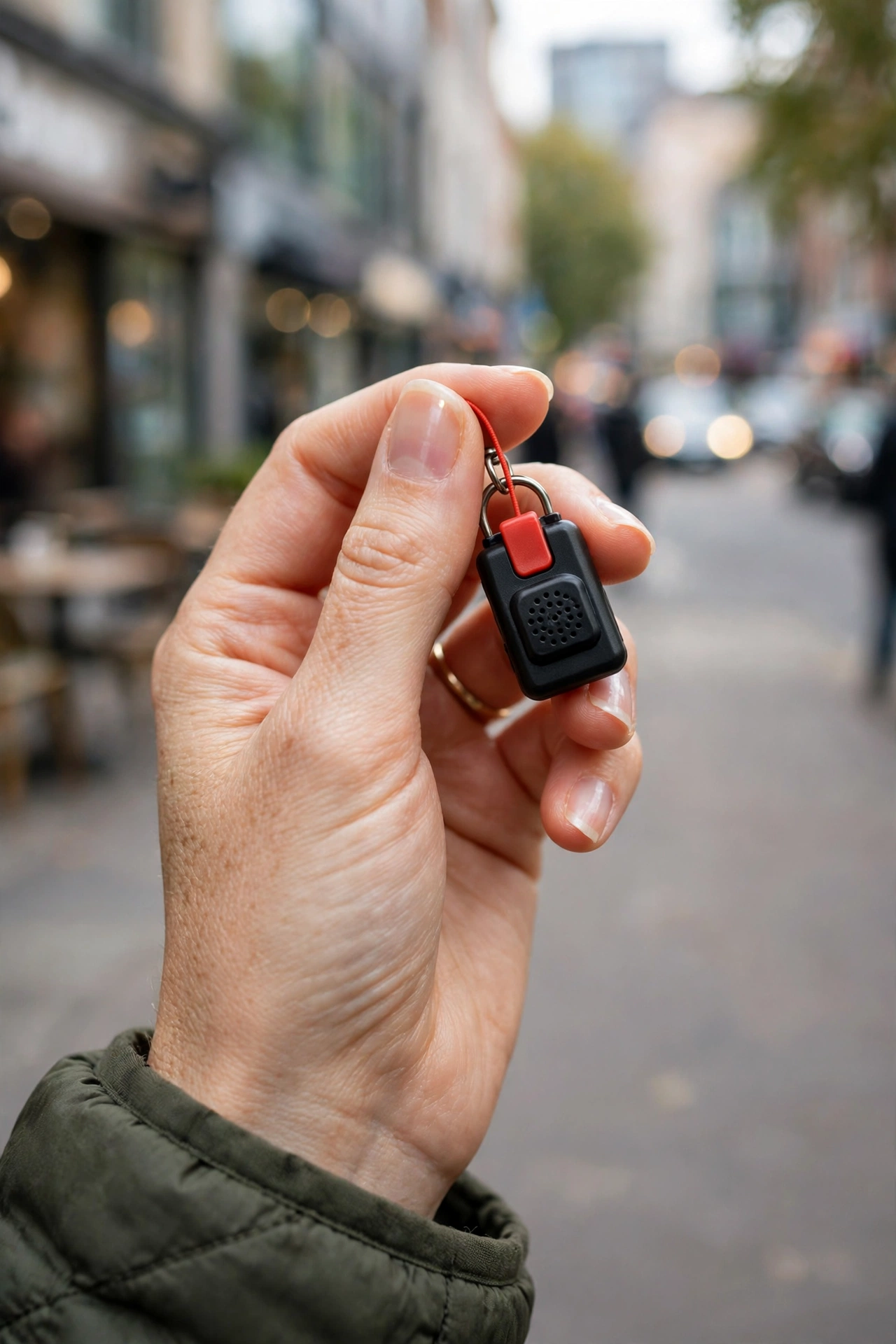
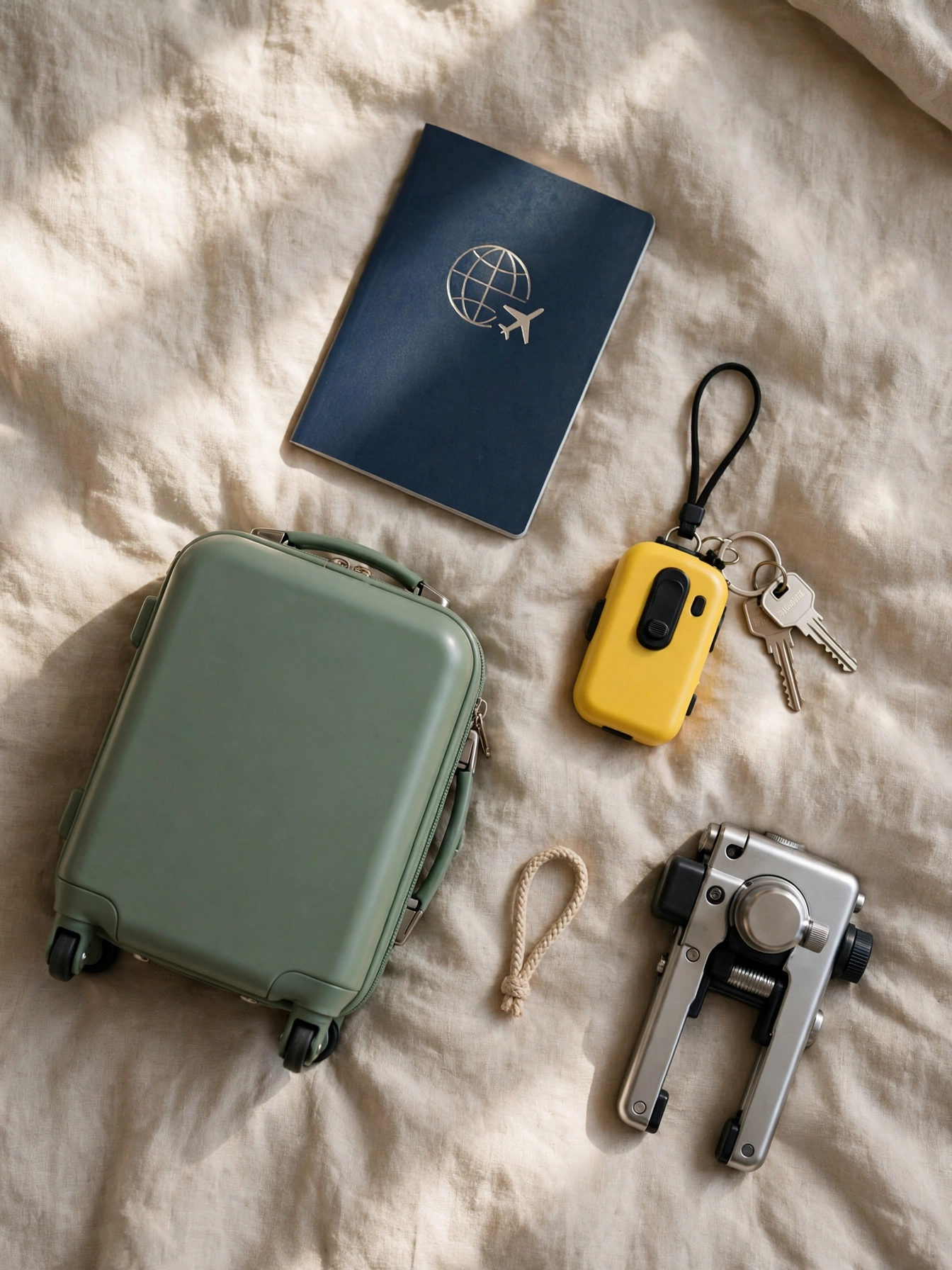
A personal alarm is one of the simplest and most useful solo travel safety gadgets you can own. It is a small device, often on a keychain, that makes a very loud sound when you pull a pin or press a button. The sound draws attention fast, and attention is often enough to make an uncomfortable situation stop. It does not need aiming, it does not need strength, and you can use it even if your hands are shaking. Many models also have a small flashing light, which helps at night.
Look for an alarm that is easy to trigger on purpose but hard to trigger by accident in your bag. A pull pin style is popular because it keeps sounding until you put the pin back, so it still works if you drop it. Test yours at home once, outdoors if you can, so you know how loud it is and how the pin feels. It will be louder than you expect, and that is the point. Knowing the sound ahead of time means you will not freeze or fumble when you actually need it.
Carry your alarm where you can reach it in seconds, not buried at the bottom of your tote. Clip it to the outside zipper of your crossbody bag or to a belt loop in busy areas. One common mistake is buying an alarm and leaving it in checked luggage or in a hotel drawer. Keep it on you, check its battery or charge before each trip, and replace or recharge it as soon as it sounds weak. As a backup, save a loud whistle in your bag too. A whistle needs no battery and works even in the rain.
An Anti-Theft Crossbody Bag and a Hidden Money Pouch

An anti-theft travel bag will not make pickpocketing impossible, but it can make your bag a much harder target in a crowd, and that matters. Look for a crossbody style you wear in front of you in busy places, with zippers that close fully and, if you like, small clips or locks that hold the zipper pulls together. Slash resistant straps and panels are offered on many travel bags, and a strap you wear across your body is already a big step up from a loose tote on one shoulder.
How you use the bag matters as much as the bag itself. Keep it zipped and in front of you on transit, in markets, and in lines. Put your phone away after you check a map instead of carrying it loosely in your hand. Split your money and cards so one loss is not a total loss: keep one card and a small amount of cash in your day bag, and keep a backup card and emergency cash in a hidden money pouch or a separate safe spot at your hotel. A flat hidden pouch worn under your clothes is a classic solo traveler essential for a passport copy, backup card, and folded cash on transit days.
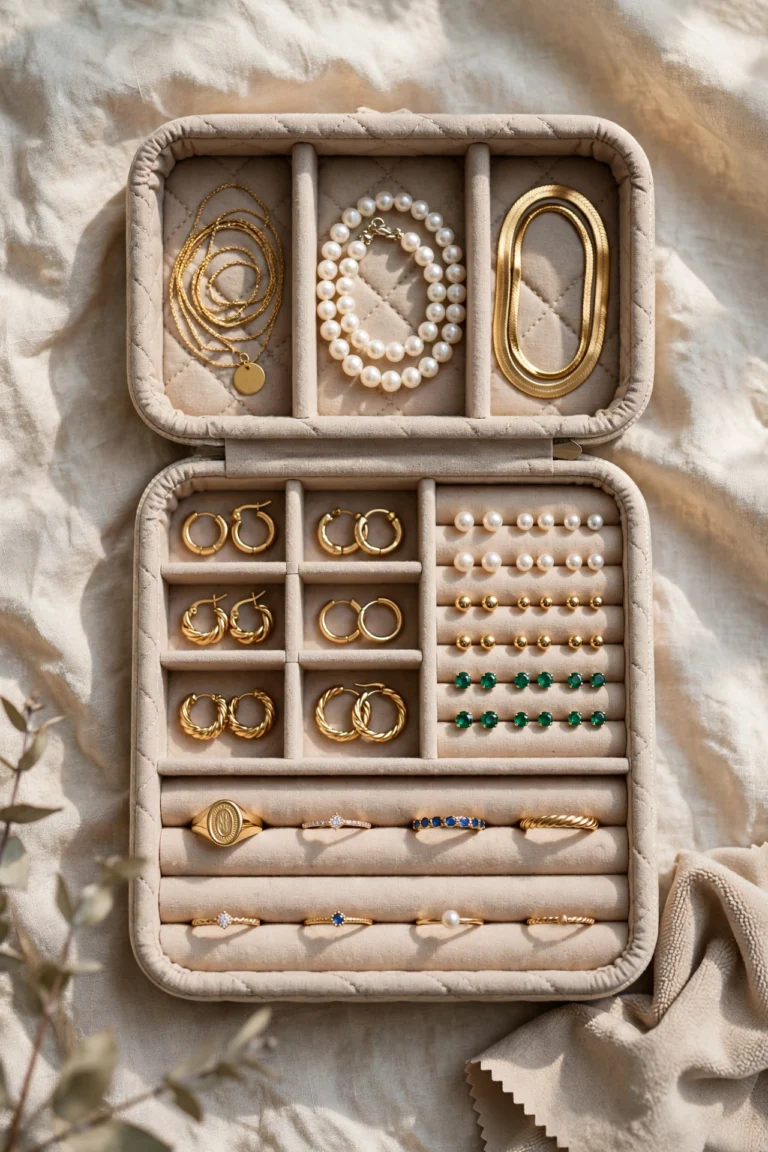
Be honest about comfort, too. If a bag is heavy or the strap hurts, you will set it down, and a bag on a cafe floor or chair back is far less safe. Choose a size that fits your real daily items: phone, small wallet, alarm, charger, sunglasses, and room for a water bottle if needed. Test it on a full day out at home before a big trip. The same split and hide approach helps with valuables as well, which is why our step-by-step guide on how to pack jewelry for travel without tangles or loss is worth reading before you pack anything small and precious.
Hotel Safety Gadgets for a Safer Night’s Sleep
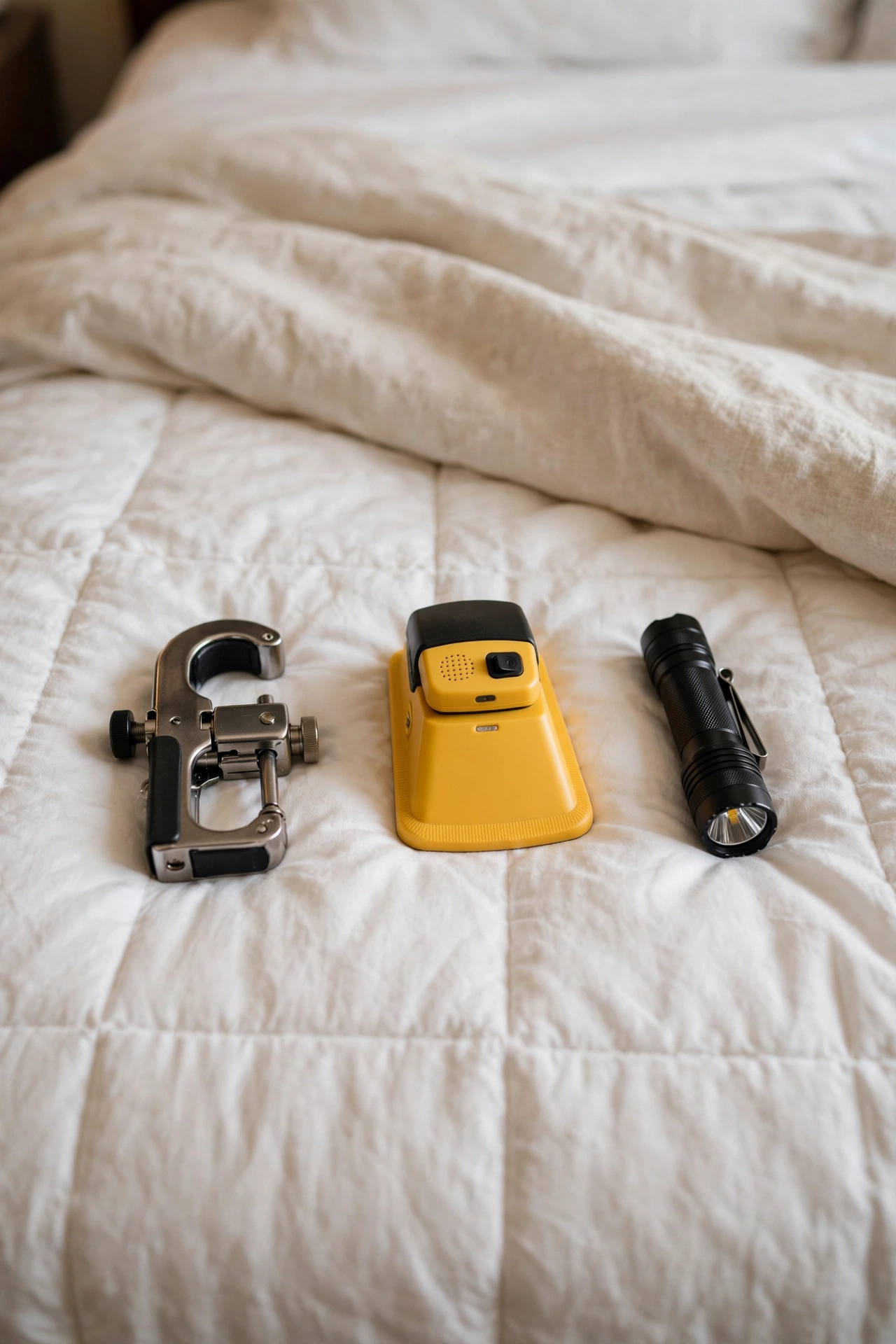
For many women, the hardest part of solo travel is not the sightseeing. It is sleeping in a new place with a lock you have never used before. Hotel safety devices are made for exactly that worry. They add a second layer to a hotel room, vacation rental, or hostel private room, so you can rest even if the main lock feels old, loose, or unfamiliar. These gadgets are small and light, most weigh almost nothing, and they take only a few minutes to set up once you know the steps.
A quick note on respect and rules: use these tools in a way that does not damage the door or lock, and follow the property’s rules. If a lock or alarm does not fit a door, do not force it. Try the second option in this section instead, or ask the front desk for help or a different room. A gadget should add calm, never create a new problem, especially in an emergency where you need to leave quickly. Always make sure you can remove your own lock fast from the inside.
A Portable Door Lock That Adds a Second Lock in Seconds
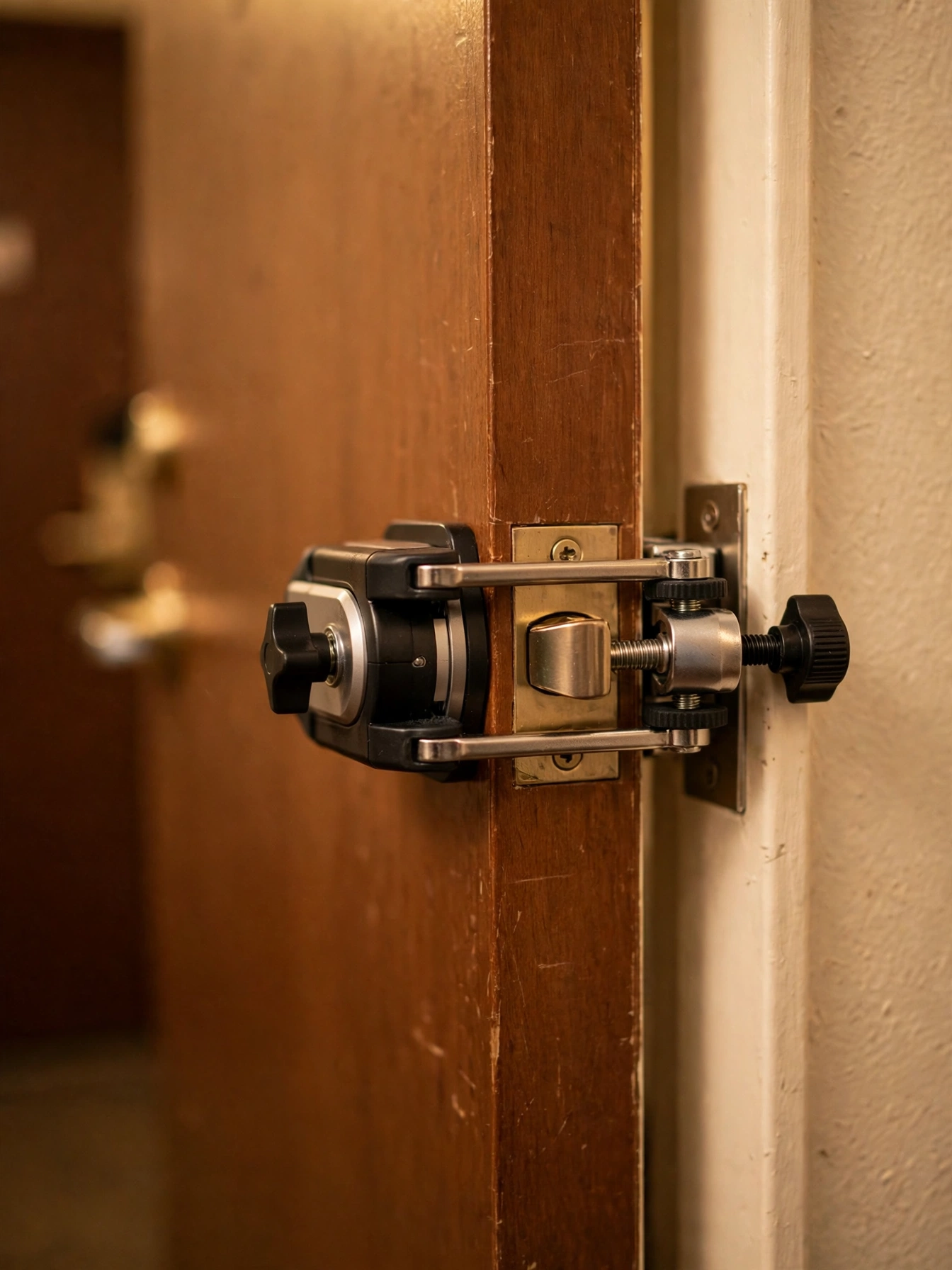
A portable door lock for travel is a small metal and strap device that works with many standard inward opening doors. In simple terms, it fits into the door’s latch area and holds the door closed from the inside, so the door cannot be opened from the outside even with a key while it is in place. It is popular with solo female travelers because it is tiny, needs no tools, and gives you control over your own room at night. It is one of the first items many experienced solo travelers pack.
Fit is the honest limitation here. Portable locks work best on doors with a standard latch and a small gap, and they may not fit every door, especially some thick, loose, or unusual doors in older buildings or rentals. That is why practice at home matters so much. Try yours on a bedroom or bathroom door before your trip, watch the maker’s instructions for your exact model, and learn how it feels when it is seated correctly. If it feels loose or slips, do not rely on it. Pack a door stop alarm below as a backup, because a wedge style backup works on a wider range of doors.
Only use a portable lock when you are inside the room, and take it off in the morning so housekeeping and staff can enter as expected. Never use it in a way that blocks a shared exit or a fire route. Store it in your carry-on, not checked luggage, so you have it on your first night even if a checked bag is delayed. Keep it in the same small pouch as your door alarm so your whole hotel safety kit is in one easy grab each night.
A Door Stop Alarm and a Small Privacy Camera Detector
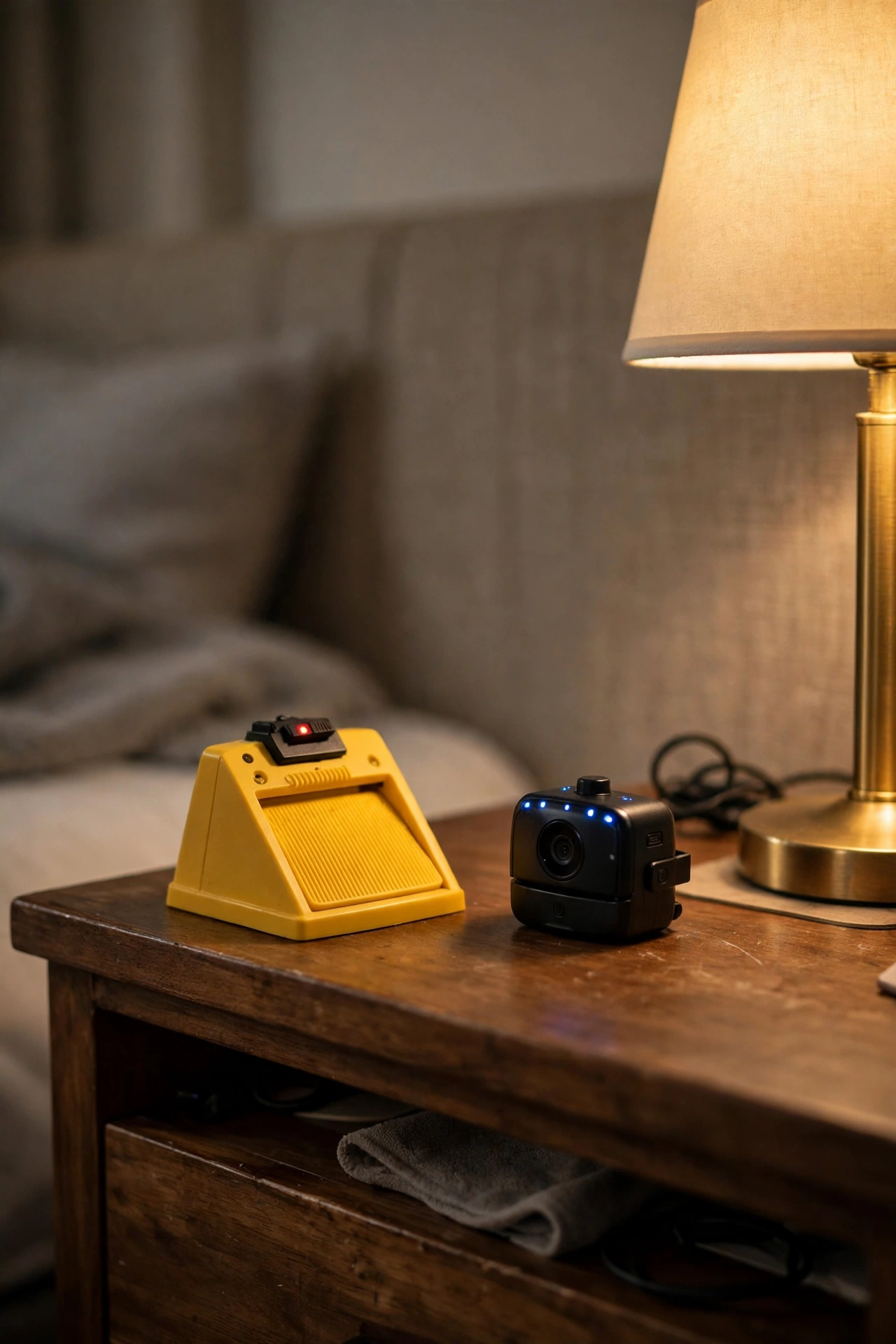
A door stop alarm is a wedge you place at the base of your hotel door from the inside. If the door is pushed, the wedge holds pressure and the built in alarm sounds. Even without the sound, a firm wedge makes a door harder to push open. It is simple, cheap, and works on many doors where a portable lock does not fit, as long as there is a small gap under the door and a hard floor for grip. On thick carpet it may grip less well, so test the angle and use it alongside the room’s own lock and chain when there is one.
A small privacy camera detector is a newer addition to many travelers’ kits. Basic models use a red light viewer or a radio signal scan to help you spot a hidden lens glint in a rental room. Be honest about what these can do: they can help you notice something odd, but they cannot prove a room is fully private. Your eyes and phone flashlight, used slowly around smoke detectors, clocks, and chargers that face a bed or bathroom, are still a useful first check. If anything looks wrong, cover it, unplug an odd device if it is safe to do so, and contact the host or front desk right away. Changing rooms is always a fair request if you do not feel comfortable.
Together, a door wedge alarm and your room’s own lock and chain make a strong, simple system. Set them up as soon as you arrive, not late at night when you are tired. Put the wedge in the same spot each night of your stay so it becomes a habit, and keep a small flashlight or your phone within reach of the bed. Good sleep is a safety tool on its own. A rested traveler makes clearer choices the next day.
Smart Tech Gadgets That Keep You Connected and Found
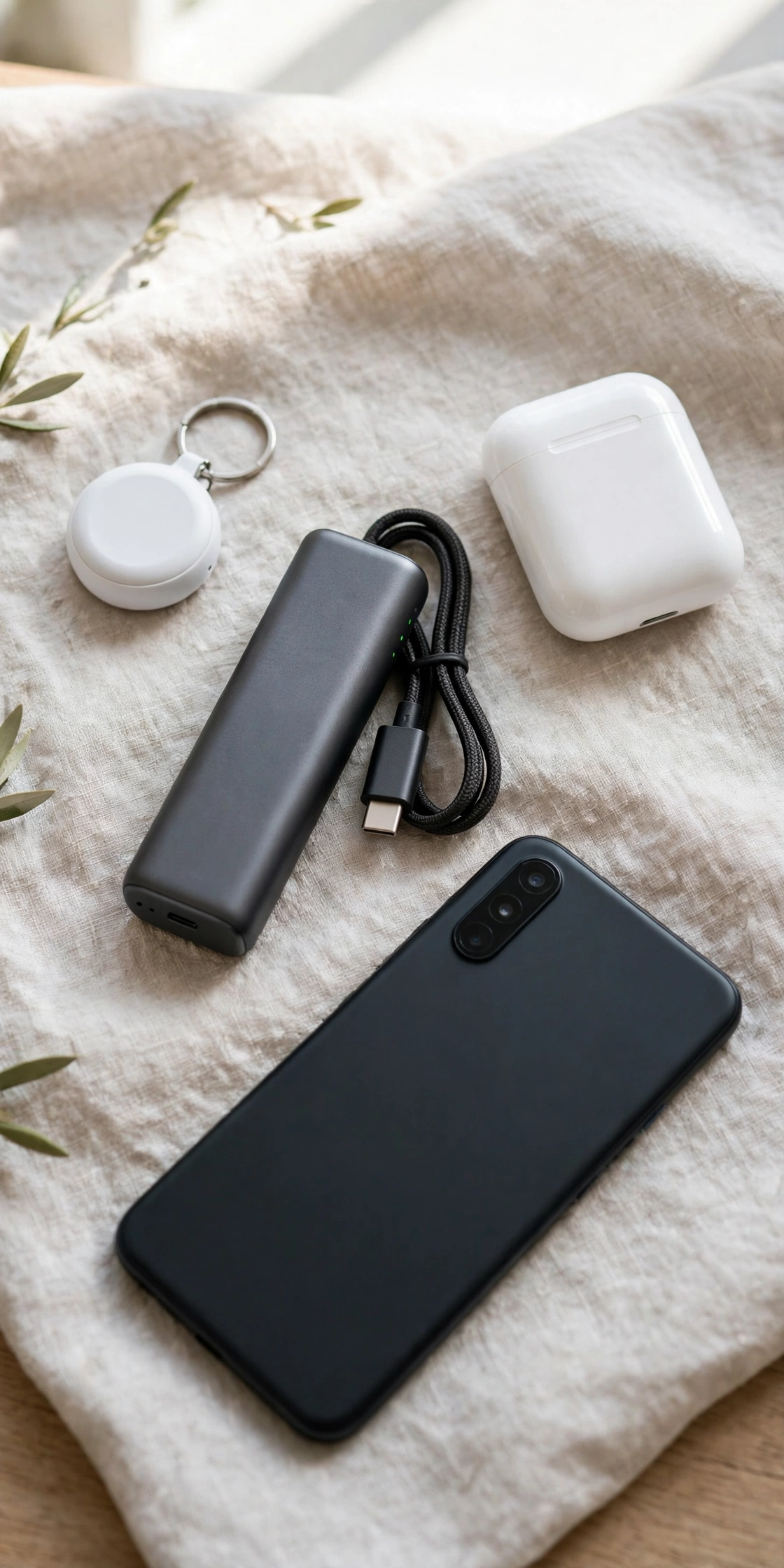
Some of the most helpful travel security gadgets are already on your phone. The right tech does not track your every move for fun. It helps a trusted person find you if your phone dies or your plans change, helps you find a lost bag, and keeps your phone alive long enough to call a ride, check a map, or message your hotel. Tech only helps if it is set up before you need it, charged, and shared with the right person. The two ideas below are worth setting up at home, calmly, at least a day before you leave.
Protect your privacy while you do it. Share your location with one or two trusted people only, not publicly. Use strong passwords and two step sign in on your travel accounts, log out of shared computers, and be careful on public Wi-Fi. A phone with a dead battery or a locked account can turn a small problem into a big one, so treat charging and account access as part of your safety plan.
A Bluetooth Tracker and Simple Location Sharing With a Trusted Person
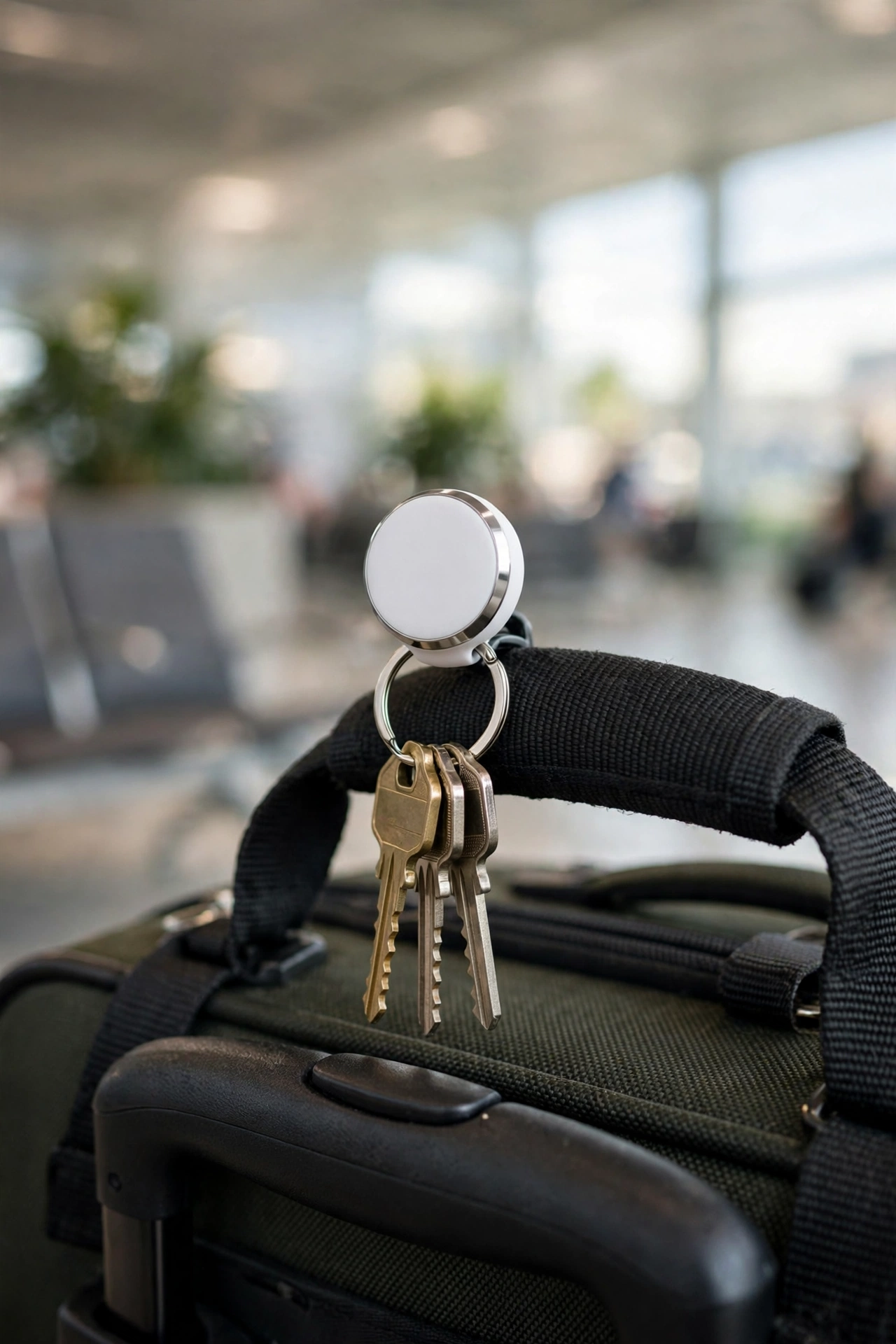
A small Bluetooth tracker in your day bag, luggage, or passport pouch can help you find a misplaced item using your phone, as long as it is within range of a compatible network. Tuck one in an inside pocket of your main bag and one in your checked suitcase if you check a bag. It is not a guarantee and it is not a live GPS in every situation, but for a bag left in a cafe or a suitcase delayed at an airport, it can save real time and stress. Check battery life before your trip and make sure the tracker is paired and named clearly in your app.
Location sharing is the people side of the same idea. Before you leave, agree with a trusted friend or family member on how you will check in. For example, share your live location during travel days or long evening outings, send a message when you arrive at each new hotel, and agree on what that person should do if they do not hear from you by a set time. Keep it simple and realistic. A plan you will actually follow beats a complex plan you abandon on day two.
If you are buying a tracker as a gift for a young traveler in your life, it also makes a thoughtful extra. Thoughtful, practical gifts like these are the same spirit behind our ideas for thoughtful gifts for boyfriends that feel personal, not generic — useful, chosen with care, and matched to how the person really lives. Whether it is for you or for someone you love, set the tracker up together first so the first use is not during a stressful moment.
A Reliable Portable Charger, a Backup Cable, and Offline Safety Tools
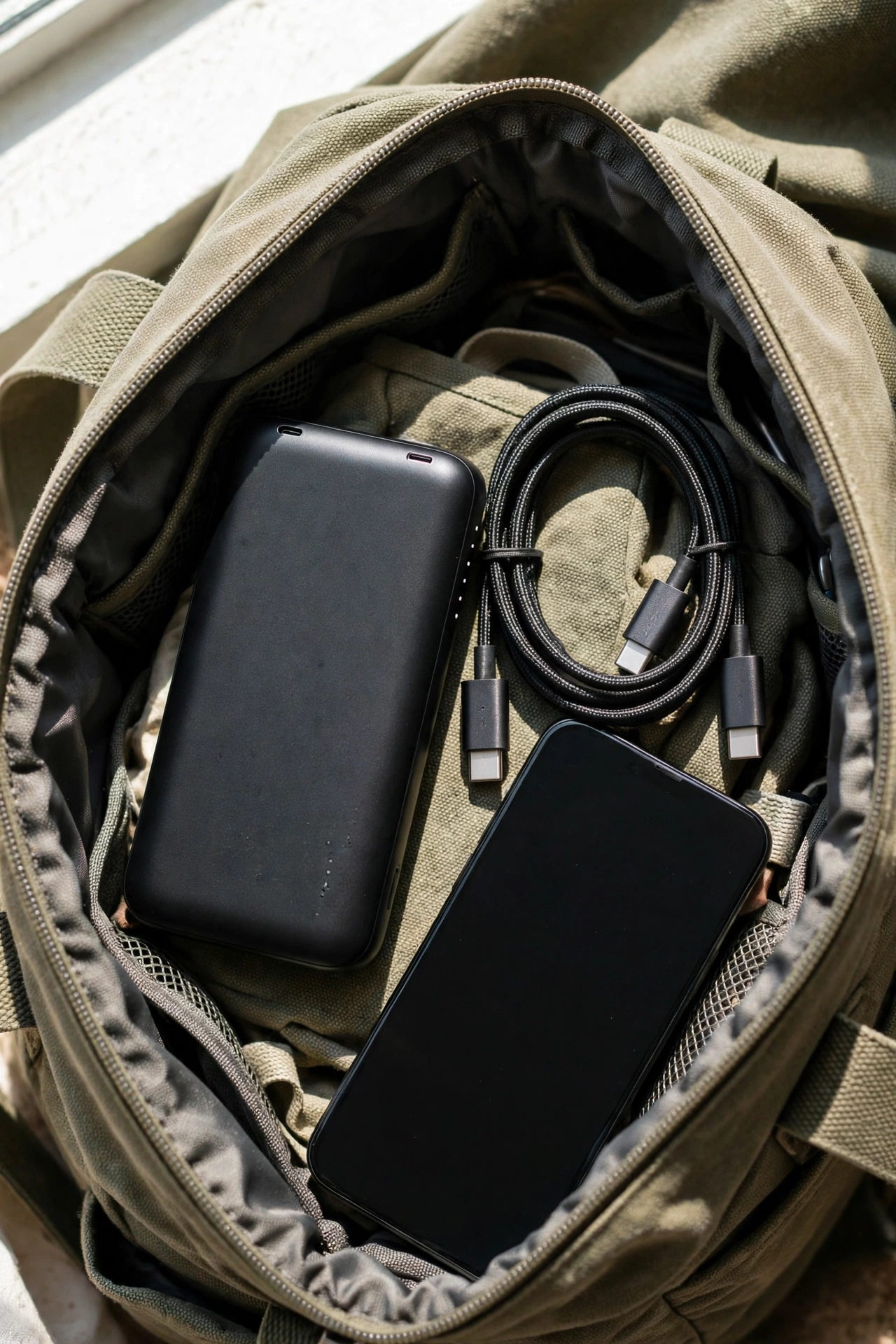
A portable charger may not look like a safety gadget, but solo travelers rank it near the top for a reason. Your phone is your map, your translator, your ride booking tool, your camera, and your way to call for help. When it dies in a new city at night, everything gets harder at once. Carry a charger that can refill your phone at least once, plus a short backup cable, because cables fail and get left in hotel rooms more often than chargers do. Charge both your phone and the power bank every night as part of your routine.
Offline tools are the quiet backup that saves the day when signal drops. Before you leave your hotel each morning, download an offline map of the area, save your hotel name and address in the local language, screenshot your booking details, and save the local emergency number and your hotel’s number in your contacts. Keep a small paper card in your bag with your hotel address and an emergency contact, in case your phone is lost, broken, or out of power. Paper never runs out of battery.
Keep your charger and cable in your day bag, not in checked luggage, and follow airline rules for lithium batteries, which generally require power banks to stay in carry-on bags. At security and on the plane, keep them where you can reach them easily. A final small tip: wear or carry your most important tech on transit days. If a checked bag goes missing for a night, you want your charger, your medicines, a change of clothes, and your safety pouch with you, not in the missing bag.
Your Step-by-Step Safety Setup Routine, From Packing to Arrival
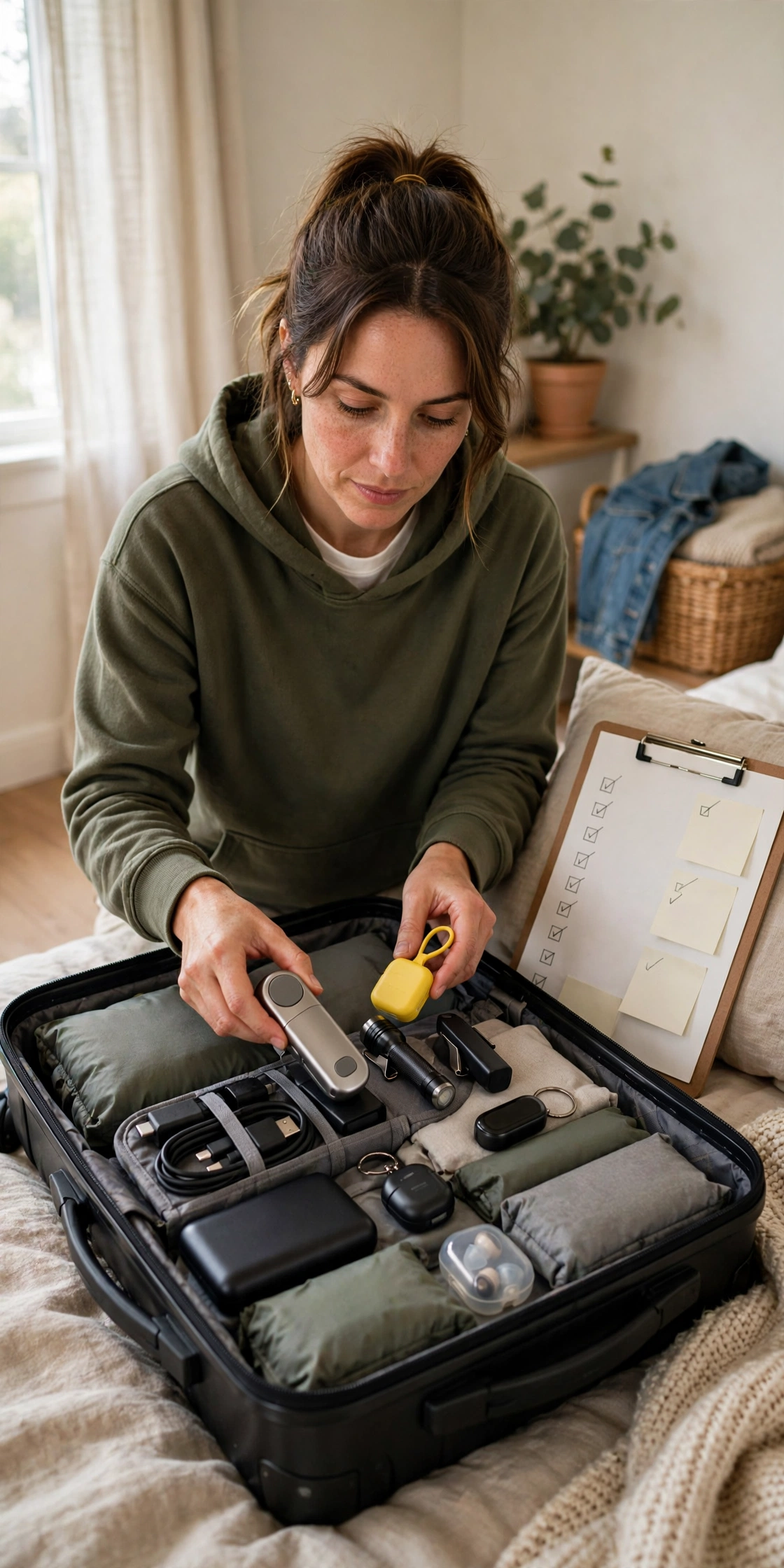
This is the part that turns a pile of gadgets into a real safety routine. Read these numbered steps once at home, then follow them in order on your trip. First, here is the pre-trip setup to do the day before you leave. Step 1: Lay out your safety pouch and check each gadget one by one — alarm, portable door lock, door wedge, tracker, charger, and backup cable. Step 2: Charge the charger and any rechargeable alarm, pair and test the tracker in its app, and pull the alarm pin once outdoors so you know its sound. Step 3: Try the portable door lock on a door at home and watch your model’s instructions, so your hands remember the motion. Step 4: Split your cards and cash into your day bag and your hidden pouch, and photograph your passport and bookings and save them in a secure place you can reach from another device. Step 5: Share your itinerary and your check-in plan with your trusted person, and save your hotel address and the local emergency number in your phone and on a paper card.
Doing those five steps the day before, not the morning of, is the whole secret. Travel mornings are rushed, and rushed packing is when chargers get left behind and locks stay untested. A calm setup also lowers travel nerves, because you board your flight or train knowing your kit works. Keep the pouch in your carry-on in the same spot every trip, so reaching for it becomes muscle memory.
The U.S. State Department also shares women traveler guidance worth reading before any solo trip.
How to Set Up Your Hotel Room Safety Gadgets in Minutes
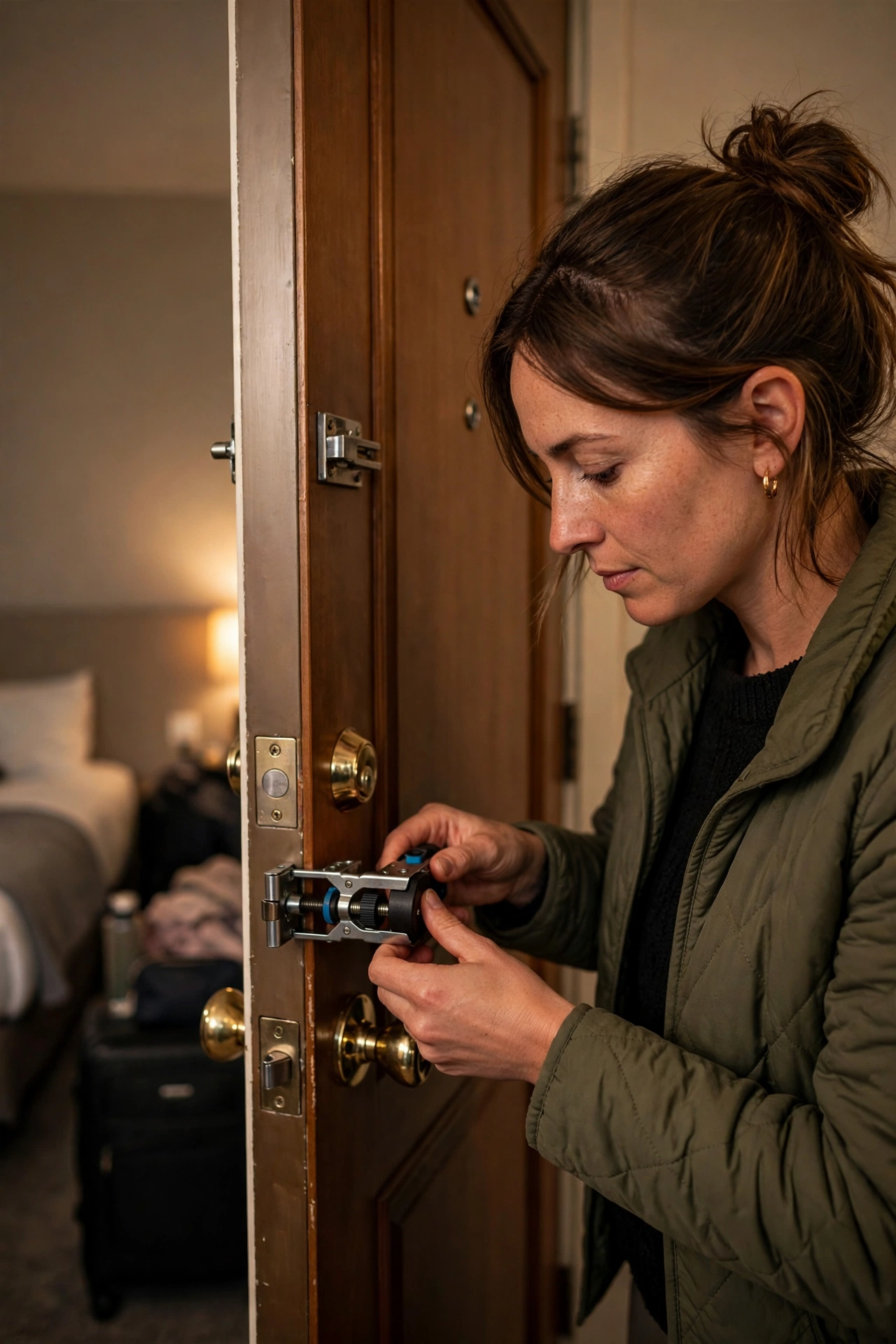
When you arrive at a new room, use this arrival routine before you unpack or lie down. Step 1: Lock the door behind you, test the handle, and check the chain or latch and any balcony door or connecting door locks. Step 2: Walk the room once — look in the bathroom and closet, check windows, and note the fire exit route in the hallway. Step 3: Do a slow privacy check with your flashlight around items facing the bed, and set up your camera detector if you carry one. Step 4: Fit your portable door lock following your model’s steps: with the door closed, slide its metal plate into the latch area so the claw grips the strike plate, close the door fully so the plate sits flat, then attach the handle part and pull gently to confirm the door does not open from the outside — if it feels loose, remove it and use the wedge instead. Step 5: Place your door stop alarm snugly under the door with the plate facing the door, switch it on, and press the door lightly to confirm it is firm. Step 6: Put your alarm, phone, charger, water, and paper hotel card by your bed, plug your phone and power bank in to charge, and send your arrival check-in message to your trusted person.
This whole setup takes only a few minutes once you have practiced at home, and it is worth doing even for one night stays. Repeat steps 4 and 5 each night, because housekeeping or a day out can shift a wedge or remove a lock. In the morning, take the portable lock off, switch the wedge off, and pack both back in your safety pouch so nothing is left behind at checkout. If any step fails — a lock that will not fit, a latch that will not close, a window that will not lock — contact the front desk or host right away and ask for a fix or a new room. Trust the routine, and trust your feelings if a room does not feel right.
What to Do If Something Feels Wrong While You Travel
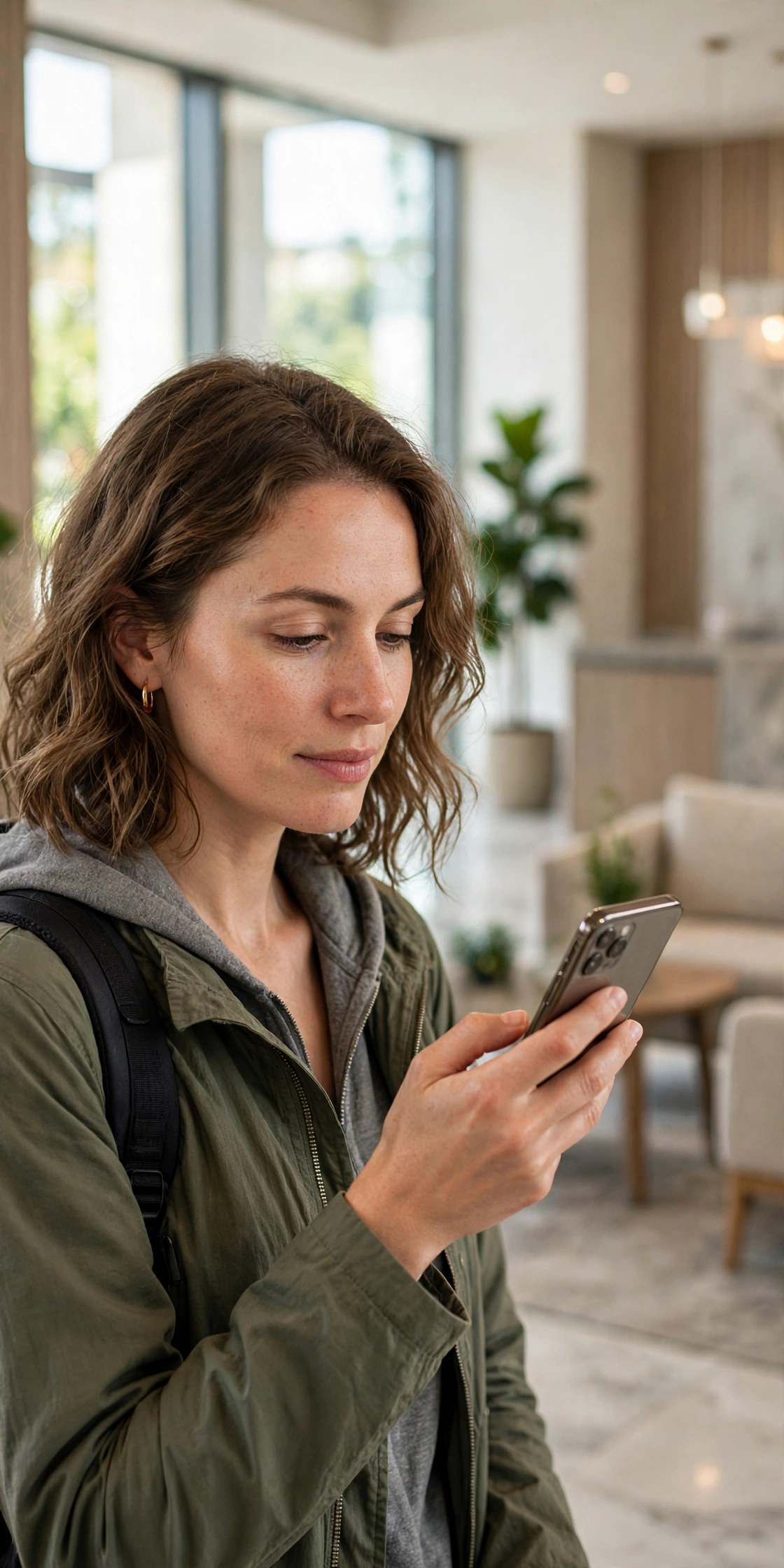
Even with great solo travel safety gadgets, a moment may come when something feels off: a street that suddenly feels too quiet, a ride that does not match your booking, or a person who will not take a polite no for an answer. Your gadgets support you here, but your judgment leads. Step 1: Move toward people and light — step into an open shop, hotel, or restaurant instead of stopping alone to figure it out. Step 2: Make noise and make a call if you need to: trigger your personal alarm if you feel unsafe, or hold your phone to your ear and clearly describe where you are, even as you walk. Step 3: Use your phone tools — check your offline map, book a ride from inside the safe place, verify the car and driver details before you get in, and share your ride with your trusted person. Step 4: Contact your hotel, your host, local emergency help, or your country’s consulate if documents are lost or you need official help. Step 5: After you are safe, write down what happened while it is fresh, and adjust the next day’s plan without blaming yourself.
It helps to decide some lines before you travel. You never owe a stranger your time, your hotel name, or your travel plans. A short, firm reply and walking away is enough. It is also fine to change plans, pay for a taxi instead of walking, skip a late outing, or move hotels. That money is well spent if it buys you a good night’s sleep and a calm next day. Solo travel should feel brave and joyful, not like a test you have to pass. Your safety routine exists so you can relax and enjoy more of the trip, not think about safety every minute.
Save These Solo Travel Safety Gadgets for Your Next Trip
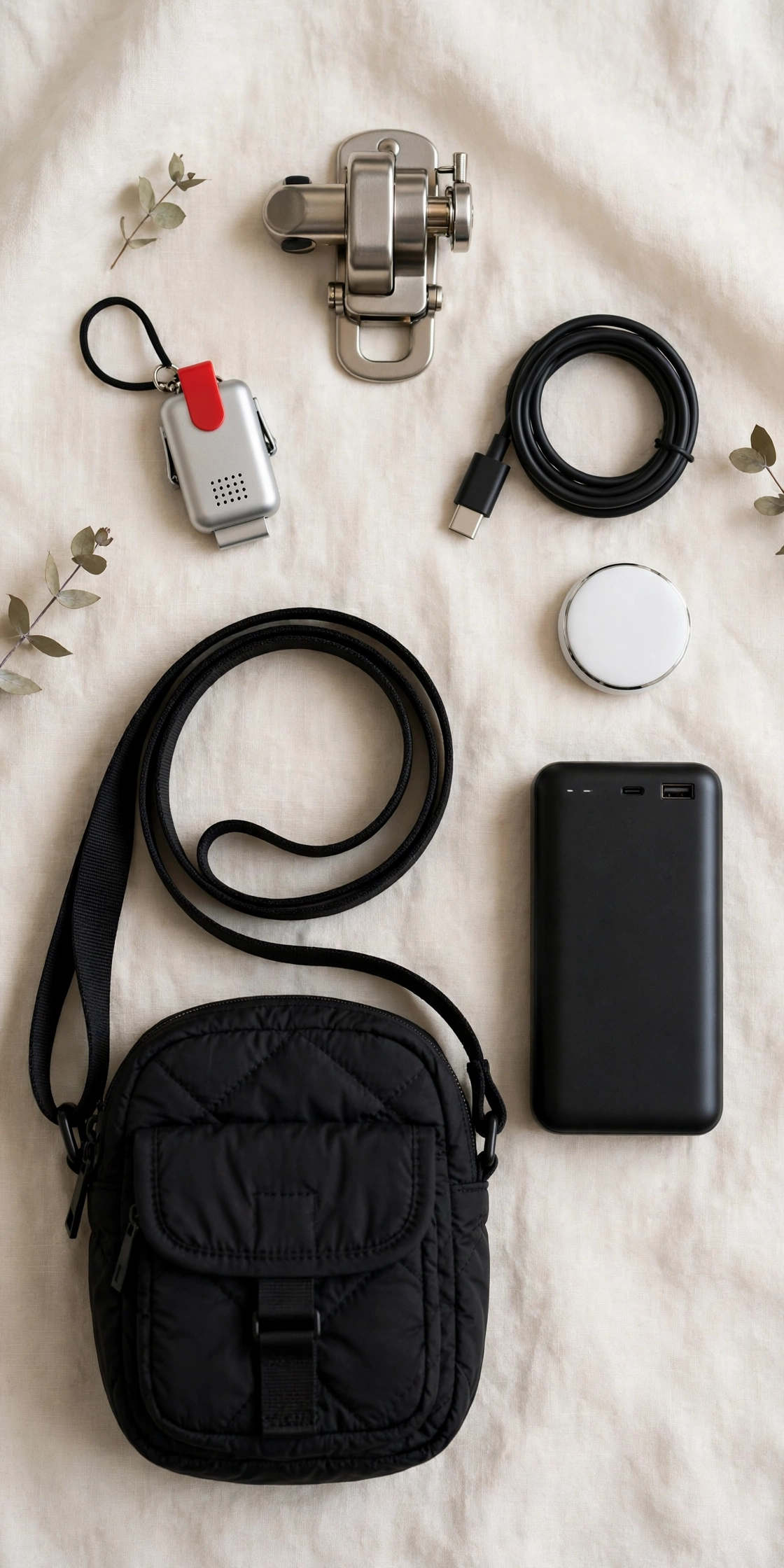
You do not need every gadget in this guide to travel solo with confidence. Start with the basics that fit most trips: a loud personal alarm on your bag, an anti-theft crossbody worn in front, a portable door lock plus a door stop alarm as its backup, a tracker in your bag, and a strong portable charger with a backup cable. Add a hidden money pouch for transit days and your offline maps and paper hotel card, follow the step-by-step setup routine the day before you leave and again when you arrive, and you have a calm, complete system that takes only minutes to use.
Before your next trip, save this post on Pinterest so you can find this checklist again while you pack. Saving it to a travel board also makes it easy to share with a friend who is planning her first solo adventure, and a shared check-in plan is even stronger when someone you trust knows the same routine. Pack early, test your kit at home, and let preparation do the worrying for you.
And when you are ready to plan the rest of your trip, explore more ideas on FashionMarid, where you will find more travel tips, outfit ideas, and gift guides made for real life. Travel light, stay aware, trust your judgment, and enjoy the freedom that made you want to take this trip in the first place. You have got this, and your future self on that sunny street or quiet train will be glad you packed with care.